Geely Unveils 2.25 Megawatt EV Charger — Can Charge a Car to 70% in Just 4.5 Minutes
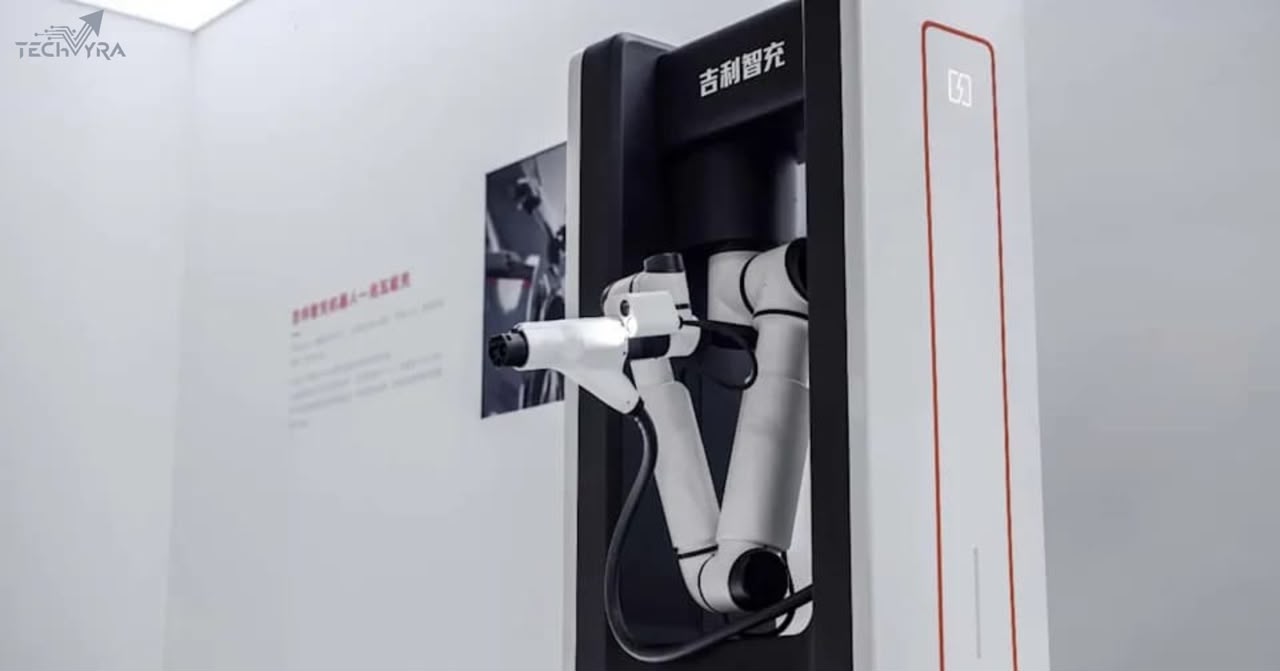
Geely has just raised the bar for EV charging speeds. The Chinese carmaker unveiled a new charging station rated at up to 2,250 kilowatts in Ningbo, and it’s already being called the fastest charger in the industry. This isn’t just a lab demo either — Geely says it plans to roll this out at scale across China.
If you’ve been following the EV charging race between Chinese brands like BYD, XPeng and Geely, this latest move pushes things into new territory. Here’s everything you need to know.
What Geely Announced
Geely’s new charger is part of its fifth-generation Geely Smart Charge lineup, and it comes with an AI system called Xingrui PowerMind built in. The headline number is the single-gun peak power output of 2,250 kW, which the company is calling an industry record.
The launch also included a new AI energy model, a cheaper battery option for entry-level cars, and an updated version of the Galaxy E5 SUV. So this wasn’t just a charger reveal — it was a full charging ecosystem update.
How Fast Is It, Really?
Numbers on paper are one thing, real-world tests are another. Geely shared results from actual cars charging on the new station.
A Lynk & Co 10 and a Zeekr 001 went from 10% to 70% charge in 4 minutes 30 seconds, and from 10% to 97% in 8 minutes 40 seconds. Worth noting — Geely’s own slide marked these as average figures, measured at room temperature, on cars with a 12C peak charging rate.
Under independent testing too, the numbers held up well. CATARC (China’s official vehicle testing body) recorded a Lynk & Co 10 hitting a peak charging power of 1,093 kW on this system.
The Tech Behind the Speed
So how does a charger push out this much power without frying the battery? Geely leaned heavily on thermal management and AI prediction.
The system uses thermal prediction algorithms that forecast battery temperature changes 30 seconds in advance, and dynamically adjusts charging power to keep average battery temperature under 55°C and peak temperature under 65°C. Geely also built what it calls an “end-to-end five point liquid cooling” setup, which manages heat across the battery pack, charging port, cable, dispenser, and the storage batteries backing up the charger itself.
There’s a battery-side trick too. Geely says it developed “lithium-ion pulse restoration” tech, which uses micro pulse currents to reactivate lithium ions that build up at the battery’s anode during repeated fast charging. In simple terms — this is meant to fight the battery wear that usually comes with ultra-fast charging.
New Battery and the Galaxy E5 Update
Alongside the charger, Geely also showed off a new battery meant for its more affordable models. This is called the Ultra Short Blade Battery, and a 370 mm version of it is debuting in the new Geely Galaxy E5, offering a peak charging rate of 6C and a 10% to 70% charge time of around 8 minutes 25 seconds.
On the durability side, Geely says these battery packs can handle 3,500 charge-discharge cycles with limited degradation. The batteries also come with CLTC-rated ranges of 550 km and 635 km depending on the variant.
Rollout Plans and Charging Rewards
Geely isn’t stopping at one showcase station. The company aims to deploy over 100,000 charging guns across China by the end of 2027, with more than 50,000 of these being Geely Smart Charge units, covering every county in the country.
To sweeten the deal for buyers, Geely announced an incentive too. First-time owners of new models with Geely Smart Charge tech will get a charging allowance of 1,000 yuan (about $150) per year for two years, adding up to 2,000 yuan (around $300), for vehicles bought before January 1, 2028.
Geely vs BYD vs XPeng — Who’s Winning the Charging Race?
This announcement is really a direct shot at BYD, which has been leading China’s fast-charging push. BYD’s current “Flash Charging 2.0” system tops out at 1.5MW, meaning Geely’s 2.2MW charger is roughly 50% more powerful. BYD’s flash-charging setup can currently take a battery from 10% to 97% in about nine minutes, slower than what Geely is now claiming.
BYD still leads on scale though — the company had already deployed 10,000 of its T-shaped Flash chargers across China as of August, with plans to hit 20,000 by the end of the year, plus 3,000 more planned for Europe.
XPeng is also in this race, but with a different approach. Working with local operator Halo Energy, XPeng opened a megawatt charging station in Hong Kong that’s open to all car brands, not just its own. That station peaks at 1 MW and 1,000 amps, backed by 400 kWh of on-site battery storage so it never draws more than 240 kW directly from the grid.
Interestingly, a Geely executive suggested the charging speed race itself might be nearing its limit. Zhang Dewang, a Geely executive, told Reuters that charging speeds are already close to their physical limit, and future gains from chasing even faster speeds will get smaller and smaller. He added that the charging market of the future would look more like petrol stations, with multiple brands sharing infrastructure to speed up global rollout.
FAQs
Q1. How fast is Geely’s new 2.25 MW charger?
In real tests, cars went from 10% to 70% charge in about 4 minutes 30 seconds, and 10% to 97% in around 8 minutes 40 seconds.
Q2. Is Geely’s charger faster than BYD’s?
Yes. Geely’s charger is rated at 2.2 MW, roughly 50% more powerful than BYD’s current 1.5 MW Flash Charging 2.0 system.
Q3. Which cars can use this new charging tech?
So far, Geely has tested it with the Lynk & Co 10 and Zeekr 001. The new Galaxy E5 uses a different 6C battery and charges slightly differently.
Q4. When will this charger be widely available?
Geely plans to have over 100,000 charging guns installed across China by the end of 2027, with more than 50,000 of them being Smart Charge units.