Meta Project Phoenix Leak: Slim Headset First Look
Meta’s next big move in mixed reality may have just been revealed ahead of schedule. New leaked images appear to show the company’s upcoming Project Phoenix headset, giving us the clearest look yet at a device designed to sit somewhere between traditional VR headsets and lightweight smart glasses.
The images were reportedly found inside Meta’s Horizon OS Prescription Lens firmware package and later surfaced through UploadVR. The leak comes just days before Meta Connect 2026, which is scheduled to begin on September 23.
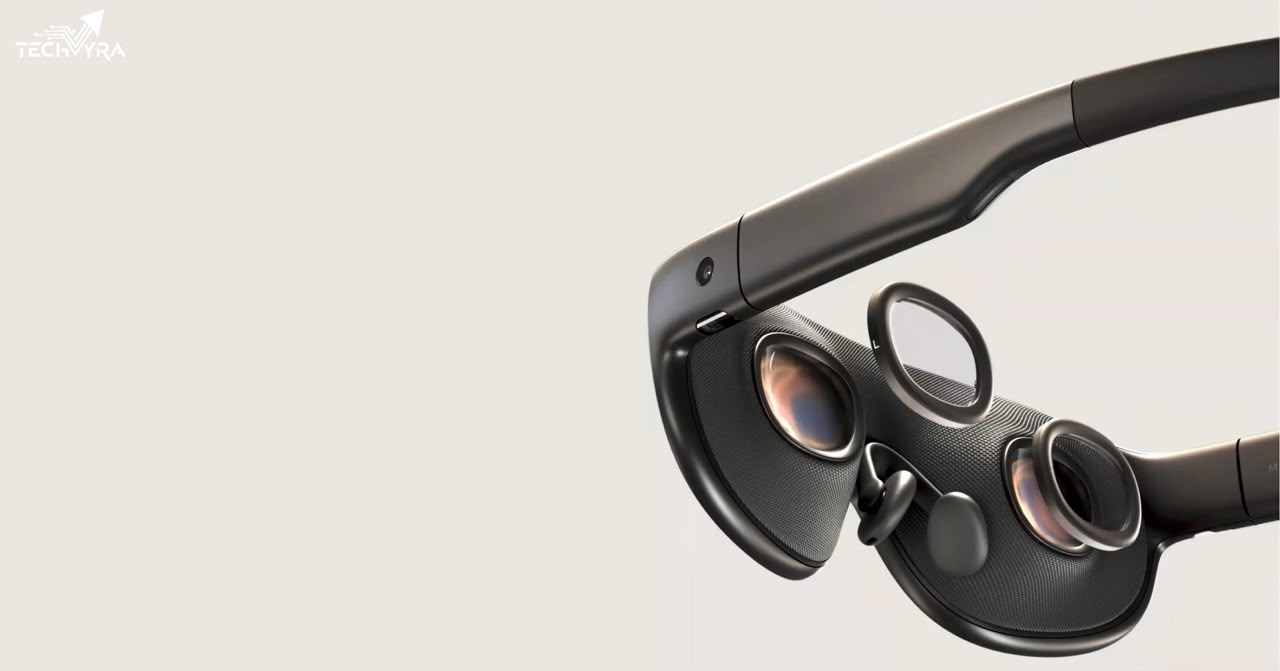
The leaked hardware looks noticeably slimmer than Meta’s Quest lineup. Instead of the bulky form factor associated with devices such as the Quest 3, Phoenix appears to use a glasses-style frame with lenses built directly into the front.
Meta Project Phoenix leak reveals a much slimmer design
The biggest takeaway from the leaked images is the form factor.
Project Phoenix appears to be designed more like a pair of advanced AR/XR glasses than a conventional VR headset. The frame is relatively thin, while the lenses remain integrated into the glasses-like body.
According to the reports, the leaked visuals show:
- A slim, glasses-style frame
- Large lenses positioned in front of the eyes
- Cameras integrated around the earpiece areas
- A cable extending from one side of the frame
- A design that appears significantly smaller than the Quest 3
UploadVR says the visuals were found in Horizon OS firmware, while Road to VR has also reported on the apparent leak ahead of Meta Connect.
The cable could be the biggest clue
One detail immediately stands out in the leaked design: a wire coming from one of the earpieces.
This could indicate that Meta is moving some of the computing or battery hardware away from the glasses themselves.
Reports suggest the cable may connect Phoenix to an external compute puck or battery unit. That approach would allow Meta to keep the headset considerably thinner by shifting some of the heavier components away from the user’s head.
This isn’t an entirely new idea in the XR market. Other companies are also exploring lightweight glasses connected to external computing hardware.
For Meta, however, this could represent a major shift from the traditional Quest design.
Cameras appear to be built into the frame
The leaked visuals also appear to show cameras positioned around the earpieces.
The cameras reportedly point outward and downward, suggesting they could play a role in environmental tracking and interaction.
However, Meta has not publicly confirmed the exact camera configuration or what each sensor will be used for.
That means specifications such as camera resolution, field of view and tracking capabilities should be treated as unconfirmed until Meta officially announces the device.
Project Phoenix could sit between Quest and Ray-Ban
Meta already has two very different approaches to wearable computing.
On one side is the Quest family, which offers full VR and mixed-reality capabilities but uses a comparatively large headset design.
On the other side are Meta’s Ray-Ban smart glasses, which are much smaller and designed for everyday use.
Project Phoenix appears to target the space between those two categories.
The leaked design suggests Meta could be working on something that provides more immersive XR capabilities than smart glasses while remaining much lighter and more wearable than a conventional VR headset.
That could make Phoenix one of the more interesting products in Meta’s upcoming XR roadmap.
Is Meta Project Phoenix launching soon?
Not necessarily.
The leak is happening just ahead of Meta Connect on September 23, 2026, so the timing naturally raises questions about whether Meta could officially show the headset at the event.
However, current reporting suggests the device is not expected to launch commercially until 2027. The Verge also reports that Phoenix has been in development for some time.
So even if Meta gives the headset an official reveal soon, consumers may still have to wait before they can actually buy it.
Meta could be entering a new XR hardware battle
Project Phoenix also arrives at an interesting time for the XR industry.
Companies such as Xreal and Viture are pushing lighter AR and mixed-reality hardware, while Google is reportedly working on its own XR glasses project.
The leaked Phoenix design suggests Meta does not want to remain focused only on traditional VR headsets. Instead, the company appears to be exploring a much broader category of lightweight spatial computing devices.
If Meta can combine a glasses-like form factor with the tracking and computing capabilities people expect from XR hardware, Phoenix could become an important step in that transition.
What remains unknown?
Despite the leak, several important details are still missing.
Meta has not officially confirmed the following:
- Final product name
- Display specifications
- Resolution
- Refresh rate
- Field of view
- Processor
- Battery capacity
- Weight
- Price
- Exact launch date
- Whether an external compute puck will be required
These details could change before the final product reaches the market.
Meta Project Phoenix: What to expect next
The timing of this leak makes Meta Connect 2026 the obvious event to watch.
With the event scheduled for September 23, Meta could potentially reveal more information about its next-generation XR hardware. For now, though, the leaked images should be viewed as an early look rather than confirmation of the final retail product.
If the design shown in the firmware turns out to be genuine, Project Phoenix could mark a significant change in Meta’s approach to XR hardware—moving away from bulky headsets and toward a much slimmer, glasses-like experience.
FAQs
What is Meta Project Phoenix?
Meta Project Phoenix is the reported codename for a next-generation lightweight XR headset that appears to use a slim, glasses-style design.
When will Meta Project Phoenix launch?
Current reports suggest that the headset could launch in 2027, although Meta has not officially confirmed a release date.
Will Project Phoenix be smaller than the Meta Quest 3?
The leaked images strongly suggest a much slimmer design than the Quest 3. The headset appears closer to glasses-style XR hardware, although its final dimensions and weight have not been officially confirmed.
What happens next?
All eyes are now on Meta Connect 2026. If Meta is ready to discuss Phoenix publicly, the September 23 event could give us the first official details about the company’s ambitious new XR headset.